


Phoenicians, Carthaginians, Romans, Muslims, Christians… So many civilisations have passed through Ibiza!
Learning about them is a different way of discovering the island during your family holiday, and what’s more, you can still visit some of the places that tell the story of its past.
Today we’re travelling back thousands of years to find out who lived on Ibiza and what traces they left behind. Are you coming with us?
Before the Phoenicians: the first inhabitants of Ibiza
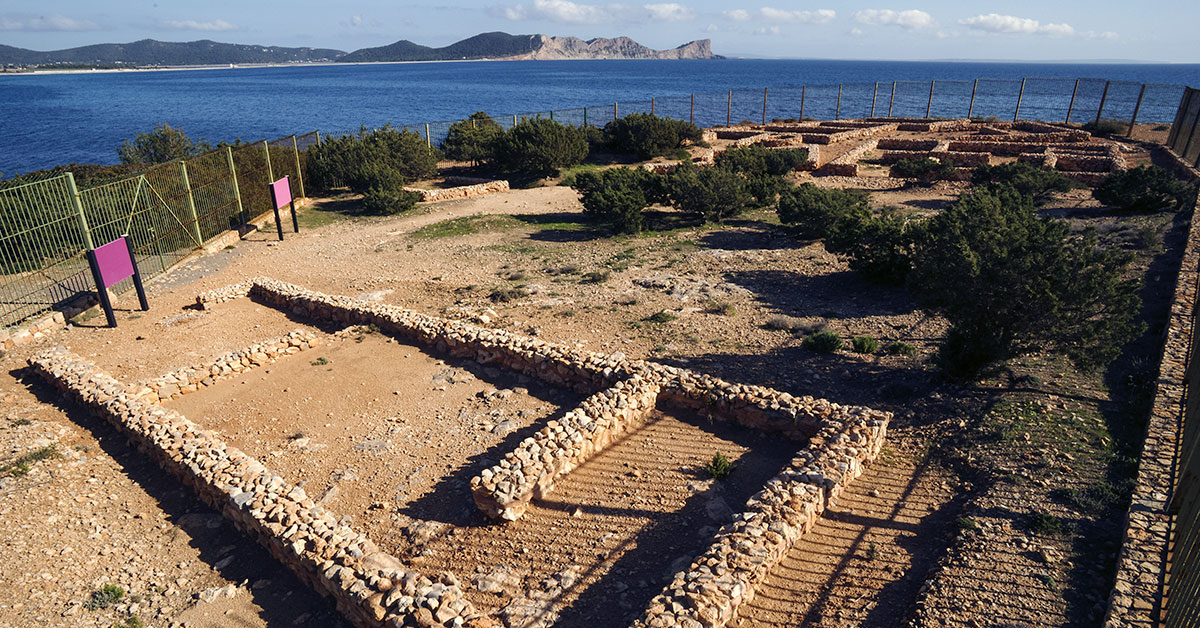
To begin our story, we have to go back to prehistoric times. During the Neolithic period, Ibiza was a stopover for seafaring traders, although there is no evidence of a permanent settlement. Remains found on Ibiza do show that the island was inhabited during the Bronze Age.
However, one of the most significant chapters in the history of the Pitiusas begins with the arrival of the Phoenicians in the 8th century BC. Ibiza’s strategic location in the heart of the Mediterranean made the island the perfect hub for trade routes.
One of the finest examples from that period can be found at sa Caleta, in Sant Josep de sa Talaia, where an industrial Phoenician settlement was established near the salt lagoons.
And here’s a fun fact to share with the little ones: it was the Greeks who named Ibiza and Formentera the Pitiusas, a name linked to the abundance of pine trees.
Phoenicians and Carthaginians: Ibiza becomes a major Mediterranean hub
The present-day Ibiza Town rose to prominence thanks to the Phoenicians, as its location between the Iberian Peninsula and North Africa facilitated trade with other parts of the Mediterranean.
Later came the Punic people of Carthage, whose colonisation began around 550 BC. During this period, the population grew considerably and the city became a thriving centre of production and export. In the countryside, people farmed the land and reared livestock, while fishing and, in particular, working the salt pans played an important economic role.
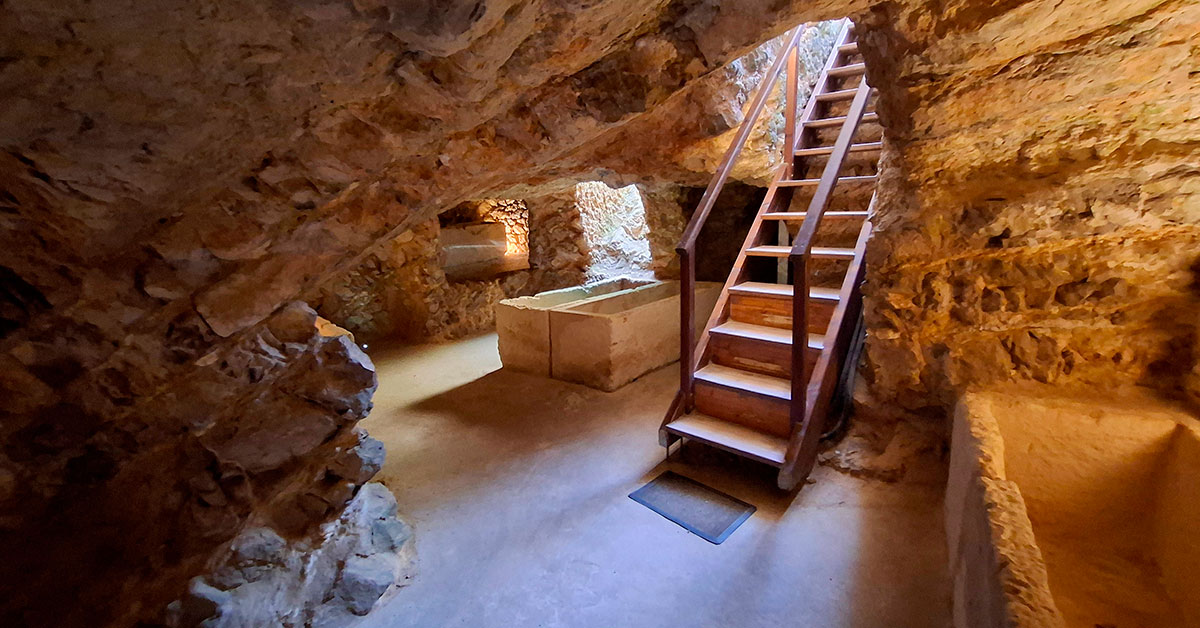
One of the most impressive remnants of that era still lies beneath our feet: the Puig des Molins Necropolis. The earliest Phoenician settlers practised cremation, while the Carthaginians later buried their dead in hypogea, chambers hewn directly out of the rock.
Visiting it can be quite an adventure if you’re looking for things to do with children in Ibiza while learning a bit of history.
From Aiboshim to Ebusus: the Romans arrive
The next stop on our journey takes us back to Roman times.
The ancient Phoenician-Punic city eventually became known as Ebusus, and the Romanisation of Ibiza took place gradually. The city came to boast several hallmarks of Roman urban life, including a forum whose exact location is unknown.
The Romans also left behind infrastructure scattered across the island. A good example is the s’Argamassa aqueduct in Santa Eulària des Riu, the remains of which give us an insight into how life was organised many centuries ago. Similarly, in Ibiza’s Parc de la Pau, you can see a Roman mausoleum, discovered recently during the redevelopment of the adjoining avenue.
After Rome, further changes were to follow. In the 5th century, the Vandals arrived, and subsequently, Ibiza came under Byzantine rule. These are periods about which far less information has survived, but which nonetheless form part of the vast historical jigsaw behind the Ibiza of today.
Madina Yabisa: Ibiza’s Muslim heritage
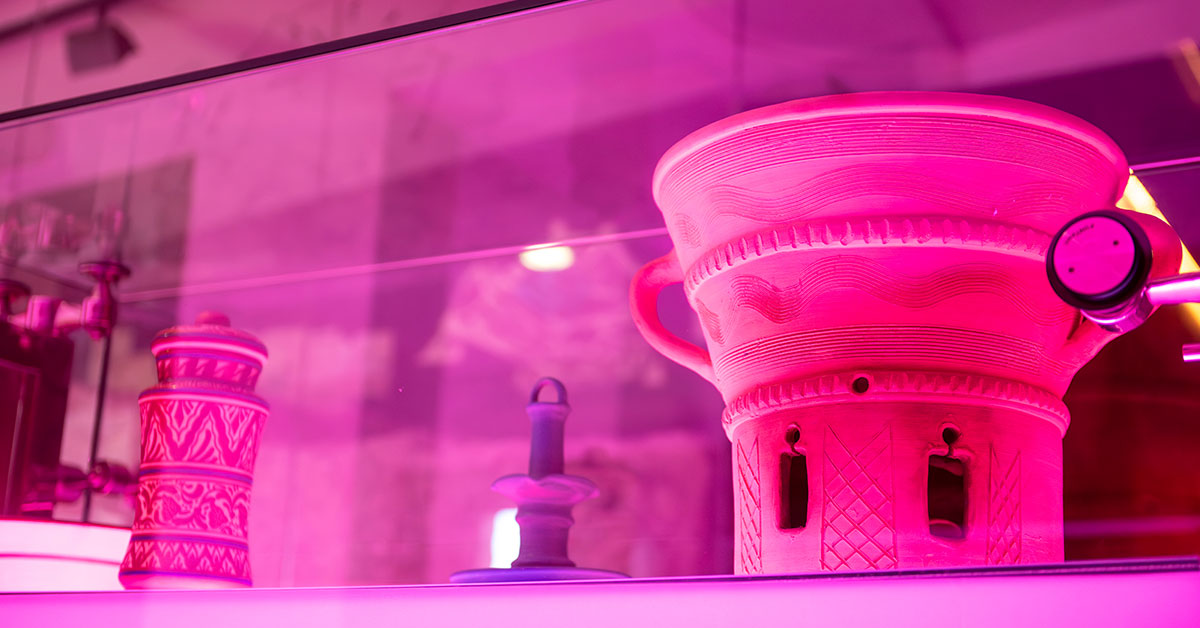
In 902, another crucial period began: Muslim rule. Ibiza came to be known as Madina Yabisa and regained its status as the main urban centre of the Pitiusas.
The city was organised according to the Islamic model. At the highest point stood the Alcazaba, or castle, a defensive stronghold, and the Almudaina, a fortified residential area. On the site of today’s Cathedral stood the main mosque, alongside the market, the baths and other facilities, all linked by narrow streets and alleyways.
Muslim influence also reached to the countryside. Systems of irrigation ditches, reservoirs and canals were developed to make better use of water and increase the productivity of the land. Some of these farming systems remained in use for centuries and can still be seen in places such as Es Broll de Buscastell.
A perfect example of how history isn’t just found in museums.
Christian Ibiza and a new chapter in its history
In 1235, Catalan troops led by Guillem de Montgrí conquered Ibiza from the Muslims, marking the beginning of a new Christian era. Many existing structures were reused and converted: the mosque was turned into a church, and the old defences were repaired.
As the centuries passed, fortified churches also began to appear in various parts of the island. Churches such as those of Sant Jordi, Santa Eulària, Sant Miquel and Sant Antoni were not merely places of worship: they also served as refuges for farmers and fishermen against attacks coming from the sea.
Later, during the 16th century, the need to strengthen the defences led to the construction of the impressive Renaissance walls that surround Dalt Vila today. Their bastions, gates and massive walls are now one of the best places to learn about the history of Ibiza while enjoying family-friendly activities.
Discover the history of Ibiza with the whole family
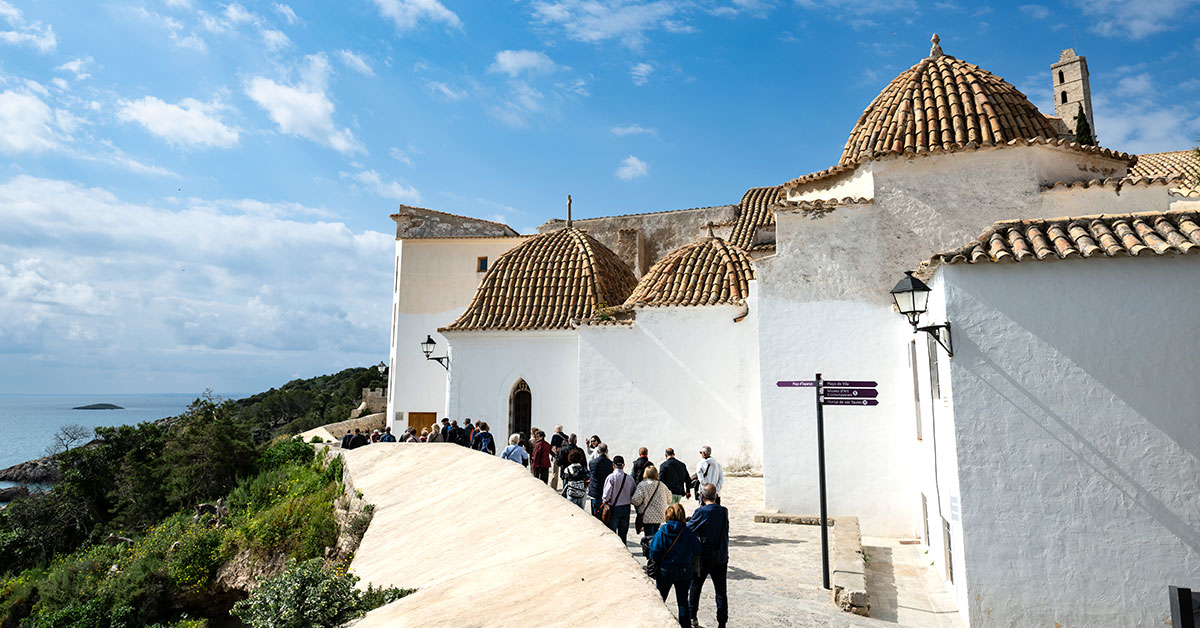
The best part about learning about the history of the Pitiusas is that so many traces of it are still part of today’s landscape.
You can walk through Dalt Vila and imagine what Madina Yabisa was like, discover the Phoenician and Punic world at Puig des Molins, visit sa Caleta or explore the historic buildings scattered throughout the area.
If you’re travelling with children, you can turn these visits into little games: look for the remains of ancient walls, imagine what the defensive towers were used for, or try to remember the different names that Ibiza has had over the centuries.
After all, a family holiday is also a chance to spark children’s curiosity. And once you’ve learnt a little about the history of the Pitiusas, you’re sure to see many parts of Ibiza in a completely different light.
Your guide to family fun in Ibiza
We hope this has inspired you to explore Ses Salines d’Eivissa and Formentera Natural Park with your family.
And if you’re looking for more family-friendly activities in Ibiza, we recommend you read some of the other posts in our blog for more ideas.
You can also consult our guide to beaches, trails, museums, restaurants, accommodation and services with the Ibiza Family Moments quality seal.
Your adventure starts here!
More entries


